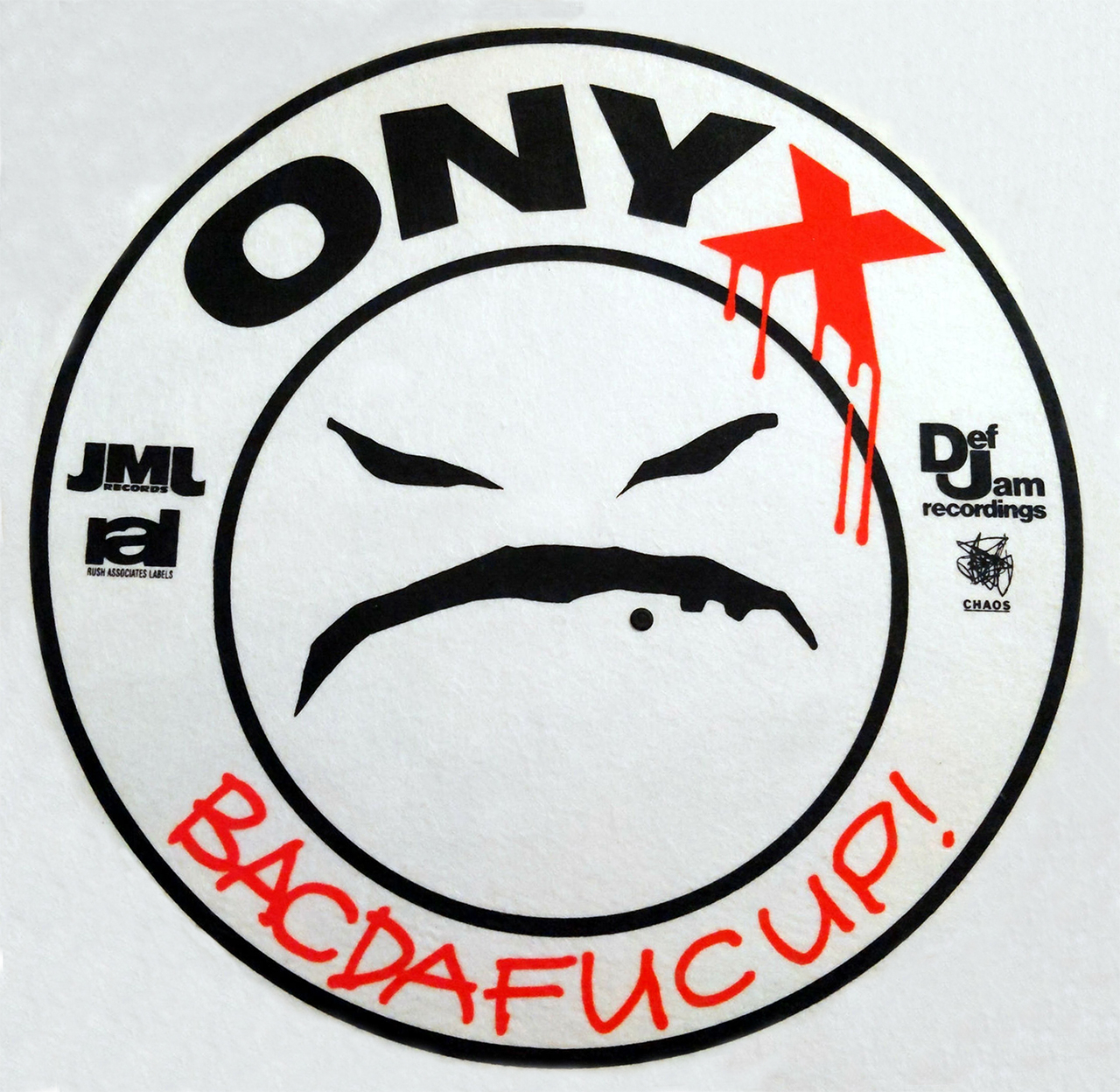
Southside Queens' Onyx originally consisted of Fredro Starr, Sticky Fingaz, Sonny Seeza (Suave'), Big D.S and producer ChySkillz. Onyx was one of Hip Hop's biggest groups, spearheaded by the legendary DJ - Jam Master Jay of RUN DMC. Onyx defied the odds in 1993 and took an aggressive sound, style and movement to become platinum-plus. This documentary, The Untold Story of Onyx, was written and created by James "Kraze" Billings and highlights their career in music, television as well as in film. If you've seen the documentaries on Audio Two, Stezo, Blahzay Blahzay, Biz Markie and others, then you know what to expect. Fredro Starr and Sticky Fingaz are still representin' the Onyx brand as a group and in their solo efforts. Dig into the archives for some of those releases...
"When you really want to hear something different take a trip deep, deep underground and you will find Cypress Hill ominously lamping in a thick cloud of buddah smoke. The Cypress Hill experience is purely pscyho-delic. Imagine a rhythmic, progressive tribe vibe combined with ultraviolent gangsta grooves. The music is dark and murky yet it remains hard and funky at the same time. Cypress takes a straight-up uncompromising look at life in the urban battlefield with songs like "Pigs," "Kill A Man," and "Hand on the Pump." DJ Muggs, formerly of 7A3, provides the heavily blunted beats while MC's Senen (Sen Dog) and B-Real kick ballistics in a crazy offbeat and unorthodox style.... this slamming debut album is one of the best new albums of '91. It will definitely have heads nodding - and nodding out - this summer and beyond." - The Source (August, 1991). That's a big compliment when you consider the classic albums that were released in 1991: NWA "Efil4zaggin," EPMD "Business As Usual," Brand Nubian "All For One," De La Soul "De La Soul Is Dead," Gang Starr "Step In The Arena," Main Source "Breaking Atoms," A Tribe Called Quest "Low End Theory" and Naughty By Nature's self-titled album, just to name a few! Cypress Hill was also named "Artist of the Year - Group" by The Source in '92. The LA Times gave the album a mostly-favorable review, however they felt, "the tracks are built around the simplest of repeated patterns, as if the producers had just figured out how to work a sampler." I think they missed the mark, not understanding the true genius behind Muggs' production. Their debut LP was released on this day in 1991, revisit it below!
Copies of some of the press for Cypress Hill's debut in 1991...
Paul began his journey in rap in 1977 as a DJ right when hip-hop was starting in New York. Shortly after that it turns into a career when he meets the rappers that would become the legendary group Stetsasonic. In this episode of What Had Happened Was, Prince Paul tells Open Mike Eagle the story of going from ‘sucker duck’ kid DJ to touring the world with Stetsasonic and the lessons that led him to strike out on his own with De La Soul. Hit the tags below for all the past episodes.
August 12, 2013: Coming off good kid, m.A.A.d city, one of the most critically acclaimed albums of the decade, rapper Kendrick Lamar could have rested on his laurels. Instead he stole the spotlight on Big Sean's 2013 single "Control," going bonkers with wordplay for almost three minutes and calling out 11 emerging rappers by name. More than a dozen response songs turned up and Billboard reported that Lamar gained more than 200,000 Twitter followers in the track's wake. Here's nine ways that this verse changed the game. While "Control" was serviced to radio stations, it didn't appear on Big Sean's Hall of Fame album, nor was it sold on iTunes or Amazon as a standalone track, nor was it given away as a free download. The official explanation is that No I.D.'s unauthorized sample usage precluded its sale, including Jay Z's "Where I'm From", Terrace Martin's "Get Bizy" and Seventies Chilean folk band Quilapayún's "El Pueblo Unido Jamas San Vencido." It's surprising that the biggest music conglomerate in the world didn't clear those samples for the most-talked about rap song of 2013. But perhaps that was the problem: "Control" arguably overshadowed Big Sean's Hall of Fame, a critical and commercial disappointment that only yielded a modest Top 40 hit in "Beware." ... "Control" inspired responses from B.o.B, Joell Ortiz, Lupe Fiasco, Joey Bada$$, Joe Budden, Meek Mill and many, many others. More than being the "Roxanne, Roxanne" of the new millennium, the subtext is that rappers responded to Lamar with actual songs and freestyles. Twitter rants, YouTube threats and random keyboard dissing no longer sufficed. - Rolling Stone (3/11/15).
In addition to all of the popular responses, there was the Juggaknots' Breeze Brewin - a favorite MC of mine - who slipped one under the radar. Bars like "...But this brother been thunderous, shit is a shame / I'm watching as the other than the under the bus they ain't giving props to / The negative get the focus, dude is better than that / He forever with hella quotes, a future veteran champ / But the disrespect to the meccas, come on fella relax / Shit is simple, expected better, I'm just telling you flat / See I ain't running up on you, I ain't trying to murder your vibe / In Terminal 5, it was me my son and my daughter / Was major when Section 80 was previous to the hoopla / I'm saying wrecking it crazy, I'll give it up to this dude, bars..." Ironically, at the same time as "Control" dropped, my artist Eternia had unknowingly released a song herself that day, amidst the internet going ablaze with commentary about Kendrick, and her song was a 'Tribute to Kendrick'as she flipped his "Hiii Power" single. Fortunately some publications still supported it, but needless to say, releasing music on the same day as "Control" was a case of bad timing at its worst, lol. "I got love for you all but I'm tryna murder you n!@@as..." Revisit the track, which was released on this day in 2013 above, as well as Breeze's response below, and apologies if the lyrics to Breeze's verse are incorrect, after all the pic of Breeze on Genius is actually J-Zone and still no one has fixed it!
NineToFive Records released My Favorite Vinyl Part 1 by KLIM Beats last year and now they're back with My Favorite Vinyl Part 2. A stunning collection of records by the talented producer KLIM Beats from Kiev, Ukraine. The mix was fully recorded live on vinyl at his home with the purpose of showing his love for these favorite records from his collection. A tracklist alone would not do it justice, I recommend clicking play below and taking a drive or cleaning your house or some shit lol. Yup, take a trip down memory lane and listen to some of his favorite records and inspirations...
On August 11, 1973, an 18-year-old, Jamaican-American DJ who went by the name of Kool Herc (Clive Campbell) threw a Back-To-School Jam with his sister, Cindy Campbell, at 1520 Sedgwick Avenue in the Bronx, New York. During his set, he decided to do something different. Instead of playing the songs in full, he played only their instrumental sections, or “breaks” - sections where he noticed the crowd went wild. During these “breaks” his friend Coke La Rock hyped up the crowd with a microphone. Herc called the technique the "Merry Go-Round." And with that, Hip Hop was born. The flyer for the jam was hand-drawn, and only cost 50 cents for the fellas and 25 cents for the ladies. Kool Herc is celebrated as the architect/founding father of Hip-Hop and 1520 Sedgwick Avenue is historically accepted as the birthplace of Hip-Hop in the Bronx. In 2017, Google celebrated the 44th anniversary of Hip-Hop with a special video (narrated by Fab 5 Freddy) and two turntables to mix "records" on their homepage. Watch below, along with art from Bizar Gomez & a note from Lyor C.
Today we acknowledge and celebrate a cultural revolution that's spanned 47 years and counting. It all started in the NYC Bronx, more commonly known as the Boogie Down Bronx. Following the fallout from the construction of the Cross Bronx Expressway in 1972 that demolished a lot of the neighborhood, times were particularly tough. The youth needed an outlet - a unifying sound, a beat, a voice to call their own. The Bronx DJ’s and MC’s rose to the task and the city loved them for it. Hip Hop was accessible. A kid with little means and hard work could transform their turntable into a powerful instrument of expression. Starting with folks like DJ Kool Herc, DJ Hollywood, and Grandmaster Flash, the grassroots movement created a new culture of music, art, and dance available to the 5 boroughs of the city and beyond. Hip Hop was also rebellion against several norms of the time, including the overwhelming popularity of disco, which many in the community felt had unjustly overshadowed the recent groundbreaking works of James Brown and other soul impresarios from the 60’s. Specifically, they felt that the relatable storytelling and emotional truths shared in soul and blues had been lost in the pop-centric sounds of Disco. So Hip Hop recaptured that connection, beginning with the pioneers who brought back the evocative BOOM! BAP! rhythms of James Brown's drummer, Clyde Stubblefield. It should be noted that early Hip Hop stood against the violence and drug culture that pervaded the time.... Hip Hop has done exactly what its founders set out to do, whether wittingly or unwittingly. It placed an accessible culture, relatable to any marginalized group in the world, at the forefront of music. In that spirit, here’s to BILLIONS of people getting a brief reminder that “Yes, yes y’all! And it WON’T stop!” - Lyor Cohen. Sources: 1, 2.
There are a few playlists in my iTunes that I haven't built up in Spotify... one of which is a list of album cuts from various albums I've posted to the site. Going back some years, I still consider most of these projects 'new' in the sense of them not being like most of the content covered on the site from 10+ years ago. It's gonna take a while to dig and add tracks to it, but to get it started, there's around 100 tracks in the playlist now. There are tracks from Blu & Exile, Big Ghost Ltd., Ty Farris, Black Thought, Dnte, Statik Selektah, Heist Life, CyHi The Prynce, Blame One, Noveliss, Apollo Brown, Bozack Morris, J Scienide, Xp The Marxman, Roc Marciano, Professor P & DJ Akilles, Lord Juco, Emanon, Evidence, Bishop Neru, Jericho Jackson, Royce Da 5'9", Torae, O.C., Eto, The AK's, Paranom, Waterr, Rigz, Brother Ali, Supastition, Choosey & Exile, Sa-Roc, Ivan Ave, Jonwayne, Iron Wigs, Westside Gunn, JoJo Pellegrino, Che Noir, Rasheed Chappell, Ka and lots more. I'd also like to try to add tracks from albums I never got to, but we'll see, for now enjoy the playlist below... Suggestions? Update: I am not sure if it'll show more than 100 songs in the browser so click through for more of the songs. Eventually I'll just make another instead ... and another ... you get the point. Dig in below...
"At first there was no concept at all," Paul recalls. "I was just in it for the beats and rhymes. But once we sat down and talked, we realized that the name would be most important. So we came up with Gravediggaz and built the concept around it. The guys' personas had to come right after the group name, of course. Rakeem said, 'Yo, I'm gonna call myself the RZArector,' and then that became RZA for short. So that's the first time he used that name.... Then Poetic said he'd be the Grym Reaper because he had the The Brothers Grimm group," Paul continues. "And at first I was like, I'll be the Pall Bearer (laughs), but then I chose The Undertaker, because I was the dude who prepped everything. [Author's note: Frukwan was The Gatekeeper.] After all that, we knew we'd be coming from a dark place. And my tracks at the time were already there." Importantly, and potentially unwittingly, Paul and the crew were creating a sub-genre within hip-hop at the time, which would come to be known as "Horrorcore." Paul explains the marketing, "Gangsta rap had already been so exploited at the time, so we went with horror. And then the guys would drop some non-horror hip-hop jewels in there from time to time. Basically, all three guys were in full character at recording sessions, starting from the earliest days. I didn't have to keep reminding them." Speaking on the recording process, Paul says, "Every verse we did and liked was always accepted, there was never any argument about whether we should re-do anything. We just knew." A death-defying demo was done by late 1992, with approximately six tracks on it. "I thought that what we had come up with was amazing, and I shopped that demo for a year," Paul explains. "But nobody would bite. Jive was interested at one point but someone there said, 'Why would you want to sign them? They're old and played out.' That was pretty depressing." Despite the industry's apathy to the Gravediggaz album, all was not lost. He remembers, "It was literally a week before the time we agreed that we were going to give up, in late '93, that Jon Baker at Gee Street came through." Click play, cont'd below...
Paul says that songs from the demo that Gee Street signed were the same as they appeared on the final album. "We didn't redo any of the demo songs," he explains. "They were on the album the same way. Tascam 8-Track cassette and [Akai] S900 samplers, straight up." ... Paul explains a producer technique he used, to get the most out of his motley crew of MCs: "I used to play those guys against each other, to push them. Poetic would rhyme in a normal way, and I'd be like, 'C'mon, man, you can't let RZA outdo you!' Or I'd tell RZA, 'Yo, Poetic ate you up on his verse.' Then they'd come back with something closer to what I wanted. I'd tell each of them that the other one was better - especially with RZA and Poetic - and they'd battle right there on the spot." ... Although the group was two years old by the time their album came out in late summer of '94, a bit of serendipity - or was it karma? - helped these misfits attract more ears to their sound. Paul says, "A lot of Wu-Tang fans were checking the Gravediggaz out because we were kind of an affiliate, so that wasn't a bad thing." RZA also brought in guest MCs from his orbit who contributed to Gravediggaz songs with which they were involved, including Scientific Shabazz (Shabazz The Disciple) and Killah Priest.... The album had two different titles, depending on where it was purchased. For most of the world, including Gee Street's birthplace in the UK, it was Niggamortis. In the US, it was changed to 6 Feet Deep. Paul says, "I think they figured the title Niggamortis wouldn't fly at places like Target or Wal-Mart. But it was always Niggamortis to us." Released in 8/94, the album reached #36 on the Billboard "Top 200" album charts and sold quite respectably, driven almost exclusively through its push at retail by the single and Hype Williams-directed video for "Diary Of A Madman."
Paul concludes, "That's probably the most fulfilling record I have ever made in my career. It stands right next to 3 Feet High And Rising and Psychoanalysis. For me, Gravediggaz was done to show the world that I wasn't wack. And to prove the same thing about the rest of the guys, too. People weren't looking out for me, Poetic, Frukwan or RZA in late '92.... It was all about achieving something collectively and gaining common ground. It was creative and it was harmonious." - Check The Technique Vol. 2 by Brian Coleman. If you don't own his books, please pick up a copy because there's some amazing content in there about 6 Feet Deep and many other classic albums. "Yo, I got one last question / Who killed Tommy's Boy?" Revisit the LP above, and some promo below... art by Cros2.