"It ain't easy being me -- will I see the penitentiary, or will I stay free?" wonders Tupac Shakur, who calls himself 2Pac on his latest album, "Me Against the World." That question was answered last winter when Shakur was sentenced to a New York prison on a sex-abuse charge after a string of legal battles across the nation. But even behind bars, Shakur still remains a step ahead of the rap pack with "Me Against the World," a stellar mix of thought-provoking rhymes backed up by smooth base sounds and slick beats. In Shakur's mind, most of his problems are the cause of a troubled ghetto childhood and jealous people out to get him. His fury and anger are peppered throughout the disc, most prominently on "F The World," a fierce and foul rebuke of his many critics. But this album is more than a troubled man's outburst against the world; just when you think he is about to explode, Shakur switches gears and drops his guard to reveal a softer side. On the disc's most poignant track, "Dear Mama," a solemn Shakur gives thanks to his mother for supporting him through all the rough times. And "Old School" represents the album's rare lighthearted moment, as he gives props to all the old school rappers in a tune that will make any true-blue fan of the genre want to break out that old Run DMC or Slick Rick tape. "Me Against the World" is rife with contradictions; on "Young N!ggaz," he chastises young black males who see the thug life as their only way out of poverty; yet on other songs, he empathizes with drug selling and gang banging, a life he so often has embraced. But that doesn't take away from this disc's power, it just highlights the complexity of urban street life, and how hard it is to present difficult issues in black and white terms. - The Associated Press, 1995. My favorite song on the album: "So Many Tears." What's yours?
Showing posts with label 2Pac. Show all posts
March 14, 2026
March 14, 2025
2Pac "Me Against The World" (30th Anniversary • 3/14/95)
Tupac Shakur is one gutsy brother. Or maybe two. The front-page Shakur is a punk, a convicted sexual felon and a fool, a hard case on a collision course with authority, a hot-head who checks himself out of the hospital hours after being shot five times and gives a stretcher-borne finger to the media. The record-making 2Pac who inhabits the recording studio, however, is a sensitive, wise and loving commentator, a straight-up observer of life and death whose measured, melodic flow gives his pained lyrics searing eloquence. In one of the many ironies that attends Shakur's existence, while the man is on his way to prison, his album is headed to the charts. Shot through the heart with grim reality and fatalism, set atop smooth, seductive atmospheres of gently rolling funk and soul, "Me Against the World" is the hip-hop album to beat in 1995. There's nothing unusual about reformed tough guys offering don't-follow-my-mistakes advice, but 2Pac cedes none of his gangsta hardness in telling young listeners not to join him in the thug life. "You could be an accountant, not a dope dealer... you could be a lawyer," he suggests, and he sounds serious. Such contradictions have always accompanied the tumult of 2Pac's combined life and art, but never before has the dichotomy been drawn in such sharp relief. The rapper-actor's fourth album begins with news dispatches about his November brushes with justice and violence, but 2Pac's obsession is evidently death, not spinning his public image. "If I Die 2 Nite," "Me Against the World" and "Death Around the Corner" ambivalently present death as everything from a fact of life to a desirable end. "I'm having visions of leaving in a hearse," he raps in "So Many Tears." "I'm suicidal / So don't stand near me / My every move is a calculated step / To bring me closer to an early death." Listen to the album, cont'd below...
Rather than an album of attempts at vindication, "Temptation" is the only song here that actually addresses the issues surrounding his sexual abuse conviction. Explaining the context of his love life, 2Pac comes off as patient and beleaguered, careful not to impose himself on a woman in the way the jury believed he did. Furthering the surprisingly positive message amid the prevailing gloom, "Dear Mama" is a tragic, tender expression of gratitude and forgiveness -- for Tupac, and for his troubled mother, Afeni Shakur. "Even as a crack fiend, mama, you always was the black queen / Mama, I finally understand for a woman it ain't easy trying to raise a man / You always was committed / A poor single mother on welfare / Tell me how you did it / There's no way I can pay you back / But the plan is to show you that I understand / You are appreciated." Likewise, 2Pac's ebullient tribute to "Old School" rap comes to terms with the past in a way that makes the future seem like an afterthought. If there's any way to separate the musician's reality from its creative translation, "Me Against the World" is one of the saddest and most affecting expositions on young black America ever offered for public display. Tupac Shakur makes the line between art and life impossible to discern, but both have the potential to leave an indelible impression. - Newsday (3/95)
June 29, 2022
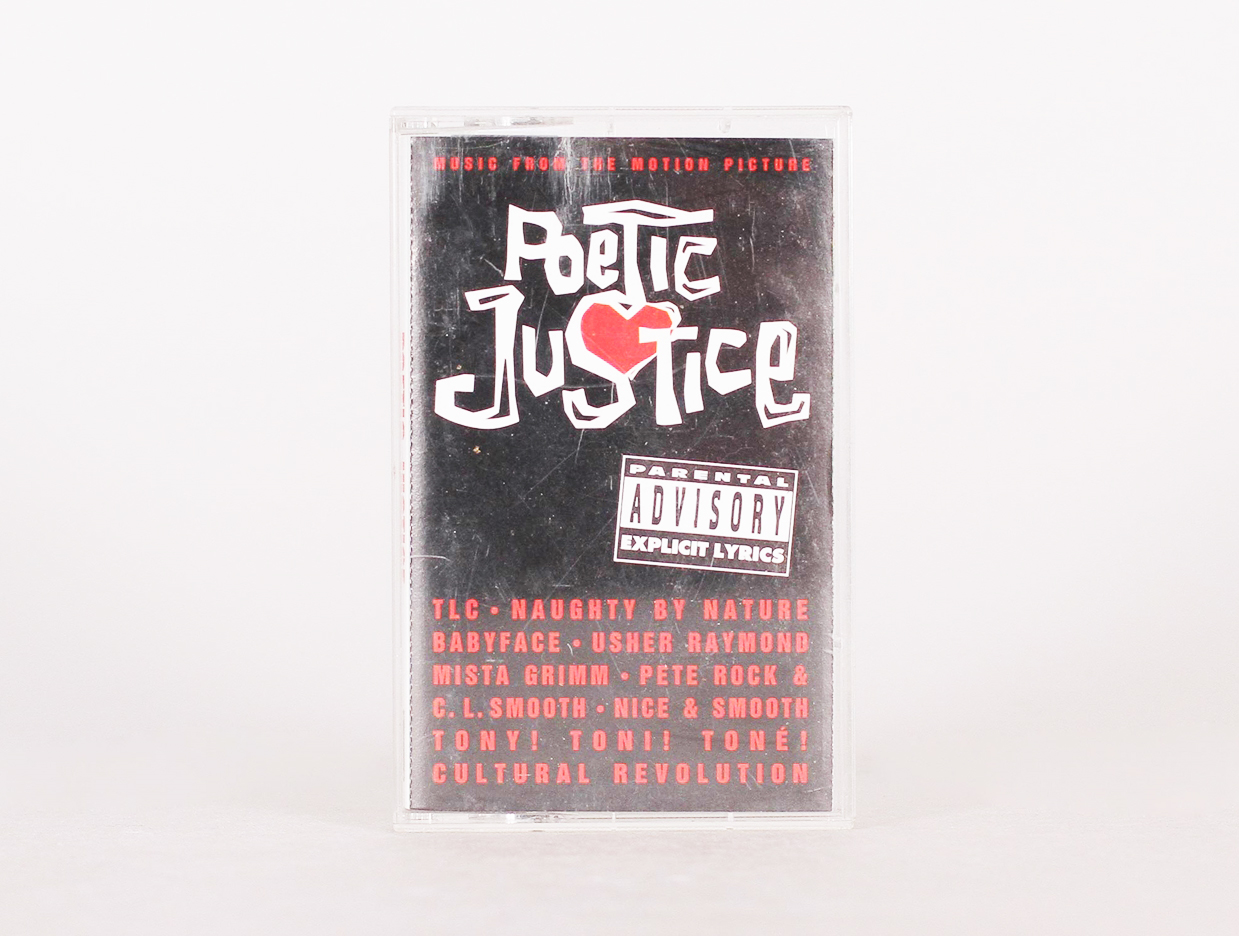
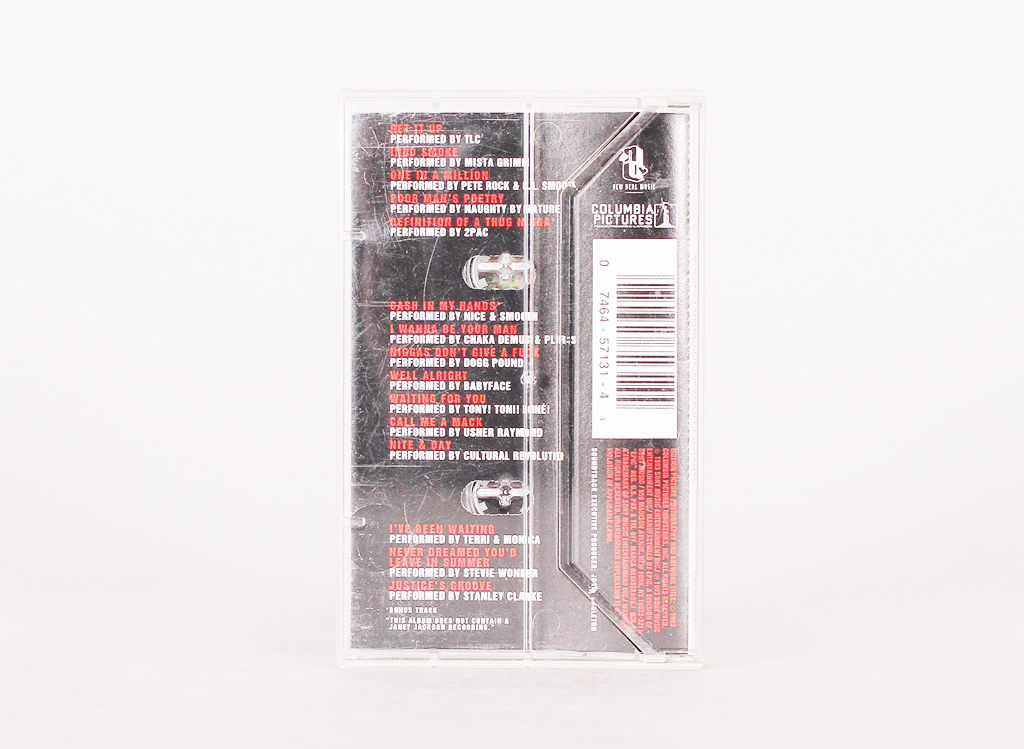
"Poetic Justice" (Soundtrack, June 29, 1993)
Poetic Justice is a '90's film that not only defined a generation but also put a spotlight on the power of language. As the movie highlighted the poetry of Maya Angelou, the John Singleton-directed-and-penned movie became a box office hit -- it grossed more than $27 million since its release in 1993. Sure, it's safe to say that the film had its fair share of big names including Janet Jackson, Tupac Shakur, Q-Tip and Regina King, but it was also the soundtrack that helped solidify it as a piece of pop culture history. - DropFM. "One In A Million" by Pete Rock & CL Smooth, as well as "Cash In My Hands" by Nice & Smooth got a lot of love, but it was "Poor Man's Poetry" by Naughty By Nature that I ran back a lot at the time. You couldn't tell me Treach wasn't one of the nicest EVER on the microphone. Of course, it hasn't aged so well and would likely never get spins today because of the references to the World Trade Center. The most popular song from the film was Janet Jackson's classic, "Again," which was not included on the soundtrack due to contractual issues. Some other joints from the soundtrack include "Indo Smoke" by Mista Grimm, "Get It Up" from TLC and others from Tha Dogg Pound, 2Pac (R.I.P.) and more. Revisit the movie and OST today...
Rest In Peace, Tupac Shakur...
Tags:
1993,
2Pac,
Janet Jackson,
Nostalgia,
Publicity Photo,
R.I.P.,
Soundtracks
June 16, 2022
2Pac "Lessons To Be Taken From 2Pac" (October 5, 1996)
Tupac Shakur passed away Sept. 13 (1996) from injuries he received in a drive-by shooting one week earlier. He was 25 years old, a talented rapper and actor whose death was met with various reactions ranging from sadness to apathy. "He had it coming, he was a victim of his own hype," was one of the many comments heard. For sure, the performer was a deeply troubled young man with an apparent death wish. He harbored a lot of pain, and when he put his mind to it, he was capable of writing vivid, introspective lyrics that made those private tensions public spectacle. According to people who knew him, Shakur was also a sensitive brother who was sometimes prone to tears. Meanwhile, fellow rappers praised his generosity and professional work ethic. So while the world-at-large recognized him as only a thug, a closer look shows him as a much more complex person. His records--at one moment he could be positively righteous, the next completely inane--reveled in his myriad moods, and the TV news reports and published articles that only discussed his violent side did him a disservice; it did what much of the press does regularly to black males in America: position us as simple, one-dimensional creatures. When media organizations glorify gangsta images without providing balance or context, it's no wonder why so many lost teens easily embrace and internalize those very false images. Certainly Shakur was a wild child swiftly running out of control, but he was also a human being who didn't deserve to die. Shakur's situation begs the question, Does one choose one's role models or are one's role models chosen? He was born to black revolutionary parents who lived by the gun. And when he drifted into homelessness for a while, the people who embraced him were street dwellers. Naturally, he adopted their codes of street behavior. It would be wrong to blame social conditions for Shakur's lifestyle and ultimate fate. He may have been a victim of circumstances growing up, but later he did have access to information and opportunities necessary to exercise more positive options. He had choices--about who he hung around with, who he did business with, etc.--but over and over he made the wrong decisions. We hear that at the time of his death, Shakur was on the verge of turning his life around. He had plans to marry and release "One Nation," an album that is about unity. Whether or not Shakur was actually going to change the course of his life, we'll never know, but we can all learn something from his mistakes. Cont'd below...
One of the larger lessons is that real g's do die. In their lives, they just drift aimlessly, uncentered. As a cultural figure, Shakur symbolized the sort of values (hypermaterialism, nihilism) that fuels much of the new-jack generation. In the absence of any solid political structure within inner cities, props and cream (money) have come to represent power. Shakur sold--and other artists sell their fans--the lie that they can overcome their poor surroundings and become somebody by doing whatever to acquire luxury items and designer duds. The fact is that going that route only wastes one's life while eroding the surrounding community. In the wake of the Skakur shooting, every adult should actively work at creating spaces where young people can feel vital without falling prey to "Big Willie Syndrome." We must all ask ourselves, Are we doing something to stir developing minds and rescue them from the abyss? There needs to be more people and organizations teaching structure and discipline, as well as instilling values, such as spiritulaity and conscience, in young folk--or they are doomed.... There needs to be more on people's minds than getting paid. Increased attention needs to be focused on long-term goals like staying paid. Since the music industry holds maximum sway with adolescents, it must bear much of the blame for the state of young black culture. It's the industry with a hole in the middle that created the format called "gangsta rap." It has sold artists' Gotti dreams as reality without regard for how the aesthetic gets absorbed into the community. With fewer and fewer veterans working in black music, interacting with fledgling acts, the information needed for growth isn't being exchanged. Today, many executives and managers are the same age as artists and are not properly delineating rules of conduct for the talent to follow. When artists are signed, there needs to be artist training at the same levels as pop and rock acts. Practitioners of hip-hop must no longer be viewed as disposable. - Billboard Magazine (October 5, 1996). Rest In Peace, Tupac Shakur. Today would have been his 51st birthday! We mourn.
Tags:
1996,
2Pac,
Art,
Autographs,
Billboard Magazine,
Happy Born Day,
Nostalgia,
R.I.P.
March 14, 2022
2Pac "Me Against The World" (3/14/95 + The Source)
Uncontrolled rage, frustration and lack of direction pretty much describe Tupac and the focus of his previous albums. Though the material was reflective of the modern madness that constantly surrounds "hip-hop's outlaw," it was also reflective of the direction he and his music were taking. Both albums showed flashes of brilliance and contained incredible hits, but other songs lacked the musical depth of his best songs, radio friendly or not. And as many agree, subject matter and content have never been the problem with Tupac's albums, just the beats and erratic song sequence. True Tupac fans may have noticed his gradual musical progression from one album to the next (including his guest appearances on other albums), and his latest, Me Against The World, follows suit as he releases his best work by far. Lyrically, he was never a slouch, but this time anger, love and 'thug life' philosophy are stronger. Musically, each cut on the album is a tight mixture of hip-hop and dusty soul grooves. "So Many Tears" expresses Tupac's mourning over lost homies and a community falling apart under heavy stress while the beat is freaked with the harmonica of Stevie Wonder's "That Girl." Tupac enlists the help of his long time homie and Oaktown rap legend Richie Rich to relate the everyday lunacy of being "Heavy In The Game." "Temptations" comes off as not quite an apology, but as Tupac's self-recognition of his moral rights and wrongs when it comes to women, indo and 40 oz.'s. On a more sensitive note, "Dear Mama" will be the Mother's Day theme for all the hard-headz who love their mama and recognize the sacrifices that are made through thick and thin. Since 1994 it seems that givin' props to the early influences of hip-hop is a must and "Old School" is Tupac's homage to the likes of Eric B & Rakim, Flash, LL, Run-DMC and so forth. Other notable tracks include "It Ain't Easy," "If I Die 2 Nite," "Young N!ggaz" and the incredible "Me Against The World." Any complaints critics and fans alike had about Tupac's last two albums can be put to rest. Me Against The World is quite simply a manifestation of Tupac's talents becoming completely whole as they are mixed with the tracks that may, for a change, overshadow him. - The Source 4/95
2Pac's career continued to ascend after Me Against... but this is still his best LP.
Tags:
1995,
2Pac,
Adverts,
Album Reviews,
Nostalgia,
R.I.P.,
The Source
February 16, 2022
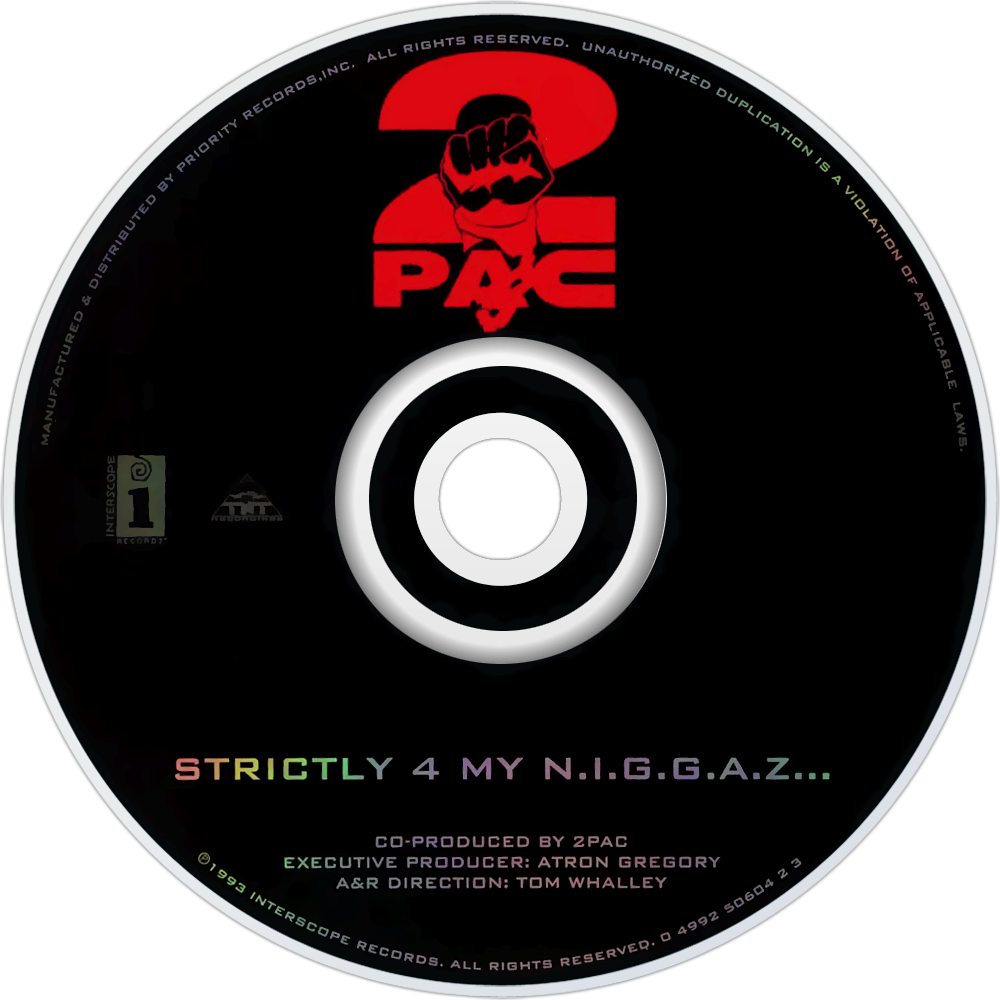
2Pac "Strictly 4 My N.I.G.G.A.Z." (Feb. 16, 1993)
On 2Pac's debut album, 2Pacalypse Now, the rapper showed himself to be a supremely passionate man, brimming over with ideas and anger and ready to voice his political and social opinions, call things like he saw them. This same kind of energy and lyrical acumen is found on his sophomore release, Strictly 4 My N.I.G.G.A.Z., a record that, while it begins exploring the MC's more gangsta side ("Last Wordz," for example, which features verses from Ice Cube and Ice-T), still includes the provocative, reflective lines on which he first made his name as a solo artist, and which he continued even as he became more and more popular (and, for some, more and more frightening). "Keep Ya Head Up," one of his biggest hits, and his tribute to black women, especially single mothers, is deeply thoughtful and poignant ("And since we all came from a woman, got our name from a woman, and our game from a woman/I wonder why we take from our women, why we rape our women, do we hate our women?"), expressing opinions that aren't often equated with hardcore rappers, while tracks like "I Get Around" brags about his sexual conquests. But this was what 2Pac was, anyway, a juxtaposition between tough and sensitive, social consciousness and misogynistic boasting, and Strictly 4 My N.I.G.G.A.Z. shows this. The angry protest songs calling out police and politicians, reminiscent of Public Enemy -- and with Bomb Squad-esque beats to boot (albeit a lesser version of) -- the screw-the-world mentality, the soft introspection, the preaching-but-not-proselytizing, and the party anthems are all here, and though the production sometimes suffers, especially in the middle of the album, where it's utterly forgettable, the record shows a continually developing MC, with increasingly complex lyrical themes, well on his way to becoming nearly unstoppable. - AllMusic. It'd be hard to explain how "Papa'z Song" spoke to me. Revisit the LP below...
At the time, this album really hit me... it's still not celebrated nearly enough.
Tags:
1993,
2Pac,
Album Reviews,
Nostalgia,
Publicity Photo
December 31, 2021
The "Juice" Soundtrack (1992)
Encore! Encore! Juice isn't talked about enough, but it remains a phenomenal film from 1992. The soundtrack boasts a lineup that stands as a veritable who's who of early-'90s hip-hop. Heavyweights such as Naughty by Nature, Salt-N-Pepa, and Cypress Hill all check in with stellar contributions to this remarkably consistent collection. In addition, respected pioneers of the genre also lend their talents to the album, with Eric B. & Rakim's propulsive "Juice (Know the Ledge)" and Teddy Riley featuring Tammy Lucas' slinky "Is It Good to You?" Other notable tracks include Too Short's cautionary tale "So You Want to Be a Gangster?" and EPMD's cooly confident "It's Going Down." Juice showcases a group of performers whose work can be appreciated because of their integrity and rhyming skills rather than their blatant sampling of entire hit songs or video gimmickry. In short, it represents everything that is right about hip-hop. - AllMusic. I still argue that "Know The Ledge" is the single greatest hip-hop song of all-time, and the exclusivity of "Uptown Anthem" on the soundtrack--at the time--was remarkable, making it a must-have. Peace to DJ Scratch, Majesty, Queen Latifah, Special Ed, EPMD, Treach, Ed Lover, Doctor Dre, Fab Five Freddy + more....
You can find more photos below and in the archives, too...
Tags:
1992,
2Pac,
Nostalgia,
Publicity Photo,
Soundtracks
November 05, 2021
Makaveli "The Don Killuminati: The 7 Day Theory" (November 5, 1996)
Over the years I've posted about hundreds of albums. For various reasons, they are projects that spoke to me at the time of their release - whether specific songs, the album as a whole; some cultural significance or just a reminder of specific moment(s) that project was the soundtrack to at the time. Enter nostalgia... sometimes when we look back at projects, we realize they were not looked at favorably at the time, lol. I can understand why journalists consider it a cheat code and think in some ways it misrepresents the real history... it's a fairytale version. Well, "Hail Mary" was a tremendous song at the time, and sure, I remember "To Live & Die In L.A." and "Toss It Up," too. 2Pac's "The Don Killuminati: The 7 Day Theory" was released just two months after his death, so the hype was at peak levels. In November 1996, David Browne of Entertainment Weekly reviewed the album and had these choice words to say about it: "The Don Killuminati/The 7 Day Theory," was credited not to 2Pac but to an alter ego, Makaveli. In this regard, Death Row has done right by him: If Shakur were alive to hear this mess, he wouldn't want his name on it, either... Posthumous records are old news in the music business, but The Don Killuminati truly feels like a work in progress... if Shakur had been planning an album playing off Machiavelli's theories on power, he neither thought it through nor completed it. The songs have only fleeting references to "Makaveli" and occasional bits of Machiavellian advice ("Keep your enemies close/N!%%a, watch your homies").... Cont'd below...
Dr. Dre and his posse livened up Shakur's previous album, All Eyez on Me, but with Dre gone from Death Row, lesser-known producers were called in. The results are plodding, amateurish gangsta rap. The album is top-heavy with cameos from second-rate rappers, and the depths of absurdity are reached on "Toss It Up," which grafts a vitriolic Shakur rap onto a standard new-jack strut. The Don Killuminati isn't just a mop-up operation; it's a disgraceful exploitation that dishonors Shakur's music and legacy... it's important to remember that Shakur had a cultural legacy. In the world of hip-hop, success comes with a price: Acquire too much fame and wealth and your friends start wondering if you've lost touch with the streets. The only remedy is to act harder... Put-downs have always played an important role in rap. But on this shameful cash-in, Tupac Shakur is the only one truly being dissed. - EW. However you see this album, it's still a part of Pac's legacy. Revisit it up above...
Tags:
1996,
2Pac,
Album Reviews,
Art,
Nostalgia
October 11, 2021
Thug Life "Thug Life: Volume 1" (October 11, 1994)
Some may only recognize Thug Life as the two words infamously tattooed across 2Pac's abdomen, but interviews from the mid-90s reveal that he had big plans for the brand—he foresaw it as the name of a worldwide movement, culture, and lifestyle of a revolutionary urban lower class. As we all know, Shakur never lived to see this dream realized, and before any of these ideas could be put into effect Thug Life was the name of a group and an album by 'Pac and his friends. Already infamous for his first two solo albums and various run-ins with the law yet not quite the household name he would become in his final two years of life, "Thug Life: Volume 1" was released by Interscope in September 1994, just two months before the New York shooting that embattled the star with Bad Boy Records, five months before beginning his eleven-month stay at Clinton Correctional Facility, a year before signing on with Suge Knight and Death Row, and two years before his Las Vegas murder. This album thus provides a snapshot of a pivotal albeit overlooked time in Shakur's life. His incarceration strongly influenced the volatile and deeply philosophical recordings of his Death Row days, which produced the most celebrated and controversial music of his catalog, and his output immediately before might serve as a suggestion of another path his career may have taken had he faced different circumstances. Perhaps most significantly, the Thug Life project is the only full album that places 2Pac in the context of a rap group. Shakur was affiliated with a few different lineups in his recording years, beginning of course with Digital Underground in the early 1990s. After achieving superstardom as a solo entity, another group of friends and frequent collaborators credited as Dramacydal began to appear on his records, the group that would later evolve into Outlawz. With 2Pac as the obvious focal point, the Thug Life lineup included Inglewood's Big Syke, who would go on to a moderately successful solo career and record with Outlawz as Mussolini; Los Angeles rappers Macodoshis and Rated R, who would later be convicted of murder; and 'Pac's elder stepbrother Mopreme. While not an official member, 'Pac's friend Stretch from the Digital Underground days, a frequent producer and guest rapper on the first two 2Pac LPs, raps on two tracks and produces five; he too would be gunned down in late 1995. Revisit it/Cont'd below...
"Thug Life: Volume 1" maintains an unusual balance between a group album and a 2Pac project. A far greater rapper and character than his buddies, 'Pac's larger than life persona is the immediate star, and he is the only member afforded solo cuts. He's also the driving creative force; more often than not his verses provide the backbone and direction of the songs, and the others merely echo his sentiments. As their name suggests, the Thug Life boys seek to engrain the listener into the day-to-day existence of a West Coast thug. While this may sound terribly proverbial on paper, they share with 2Pac passion and charisma that usually compensates for any lyrical and conceptual deficiencies. The conviction that each exhibits makes it hard not to feel the desperation, entrapment, injustice, and do-or-die mentality that they purvey, and this is what makes their narratives so compelling. At an age where most young folks hope to explore and enjoy the world's myriad opportunities, these men barely into their twenties felt hopelessly ensnared by societal factors beyond their control and turned to lives of crime—lives for which their criminal records indicate were hardly embellished in their rhymes.... "Thug Life: Volume 1" is an essential and frequently overlooked chapter of the 2Pac saga, bearing the fruits of the West Coast renaissance and the great year that was 1994. Like most of Shakur's music, its intangibles make it a better record than the sum of its parts, and the case for classic status could be made for half of these ten tracks. "Thug Life: Volume 1" is classic 'Pac, exhibiting all the apparent inconsistencies and contradictions that made him the world's most compelling rapper: a conscientious yet shameless thug, at times brooding and others exuberant, and seemingly obsessed with his own death, which ironically awaited him less than two years down the road. Listening to it, it boasts all the qualities that led to his being labeled a visionary, a martyr, and an icon, but it also features timeless, impeccably produced music from an unheralded group, comprising an essential listen that captures rap's most fascinating and polarizing figure. - RapReviews. Rest In eternal Peace, Tupac Shakur!!!
Tags:
1994,
2Pac,
Album Reviews,
Nostalgia,
Thug Life
March 14, 2021
2Pac "Me Against The World" (March 14, 1995)
No recent rapper has found himself better known but less understood than Tupac Shakur. Having spent more time in court than Perry Mason -- racking up charges of attempted murder along with a conviction for sexual assault -- Tupac burst into the mass consciousness as a tabloid-ready fiend. It only helped the media's cause that Tupac could fit an age-old cliche -- the angry young black man hellbent on revenge. Not that Tupac himself stood blameless in hawking this flat, inhuman image to the media. Every sneering statement and threatening gesture he made seemed calculated to appall and titillate viewers of the 11 o'clock news, leaving him a virtual cartoon of rage. Thankfully, the rapper's first album since his public demonization goes a long way toward humanizing him. While its title ("Me Against the World") may threaten more rounds of finger-pointing and macho posturing, the results offer a nuanced cautionary tale, full of vulnerability and even culpability. In "So Many Tears" and "It Ain't Easy," Tupac (aka 2Pac) explores, rather than exploits, his own nihilism, while in "Temptations" he maps out the war within himself (between doing the right thing and getting the quick fix). His most understanding passage comes in "Dear Mama" where he reconciles with his mother a former Black Panther and, later, a crack addict. Tupac's candor in describing his eventual appreciation of his mother shows true maturity. Revisit 2Pac's Me Against The World, cont'd below...
Tupac's words may stand out but his delivery and the music he matches them to hold only generic appeal. He favors a minimal style of hip-hop, with just the merest samples to decorate his bedrock of bass. This may have its draws, but originality isn't one of them a point that would matter less if Tupac's delivery had the musicality of hip-hop's greatest orators like the righteous Chuck D or the graceful Snoop Dog. In its stead, Tupac offers an Everyman quality, which at the very least ups his role as a besieged symbol. After all, "Me Against The World" hasn't held the No. 1 spot on Billboard's pop charts for the last three weeks for nothing. Tupac's public traumas resonate not only with alienated African-Americans but with teens of every race. If Tupac's articulation of his problems hasn't resulted in music as overwhelming as his notoriety, it has created a useful piece of sociology. His album offers a probing look inside a life normally seen skin-deep. - New York Daily News (April 11, 1995). Fans may not declare that 2Pac was the greatest RAPPER, but that vulnerability, trauma and everyman quality helped make 2Pac one of the most impactful artists of our generation. If you haven't already, dig in the archives HERE to read the album's original press kit. R.I.P., Tupac Shakur.
Tags:
1995,
2Pac,
Album Reviews,
Nostalgia,
NY Daily News,
Postcards,
R.I.P.
February 16, 2021
2Pac "Strictly 4 My N.I.G.G.A.Z." (Feb. 16, 1993)
"Over the 12 months of 1993, the Wu-Tang Clan, Snoop Dogg, A Tribe Called Quest, Queen Latifah and more than a dozen other rap groups released albums that helped change the sound of America. That year one of the most influential rappers to ever hold a microphone released his breakout album. In January 1993, Tupac Shakur was 21 years old. He was about to drop his second album, and the first feature film he starred in had been a success. He was on the cusp of superstardom. Kevin Powell, a young journalist at Vibe magazine, was trying to talk his editors into taking a story. "I explained to them, 'Look, there's this young man who is the son of a Black Panther party member, Afeni Shakur. He already has one album out called 2pacalypse Now and he's in this really controversial hit film called Juice. He's someone we should really be paying attention to,'" Powell remembers. Vibe eventually paid attention; so did radio; and the album Tupac released in February, Strictly For My N.I.G.G.A.Z., landed three songs on the charts.... "[Strictly 4 My N.I.G.G.A.Z. was] a record you could party to, but then also had a sense of cultural resonance to it," John Singleton says. "That was that time — black people were pissed off but we wanted to party at the same time." 1993 was the year following the Los Angeles riots, which had been sparked by the Los Angeles Police Department's beating of Rodney King.... "Keep Ya Head Up" is a song about society's mistreatment of women. The other two hits from Tupac's album, "I Get Around" and "Holler If You Hear Me," are not. The songs seem to come from different places, but Powell says that's Tupac..."
"When you look at his album Strictly 4 My N.I.G.G.A.Z., it's him," Powell says. "Half of it is very deep social political commentary and the other half is the kind of stuff that became associated with thug life and the kind of gangsterism that became associated with hip-hop." J. Cole says these two sides are what make Tupac more than just an actor playing a role. "Some people criticize him for being on such opposite ends of the spectrum. But I learned growing up — at least in my case, and I like to think for everyone else's case, whether they like to admit it or not — that's more human than anything." But Tupac and his second album also represent something bigger, says Powell... "There's no other singular figure in hip-hop like Tupac Shakur. He wasn't the greatest rapper in the world. He didn't necessarily have the best lyrics all the time, but there was not a figure that captured what hip-hop is and where it came from: working-class black American and Latino and West Indian people from New York City and black and Latino people from the West Coast. No one captured that the way he did." - NPR. As always, I recommend taking the time to revisit the project below. R.I.P., 2Pac!
February 13, 2021
2Pac "All Eyez On Me" (Press Kit, 1996)
"Despite controversy and conflict, this fiery young man whose every act is watched by those who want to destroy as well as those who seek to elevate, wields more power and influence than ever. Still, after nearly a year of incarceration, 2Pac has emerged not only with the rage and pride he was born with intact but with a new understanding as well. On All Eyez On Me, his fourth solo album, the first on Death Row Records, 2Pac is more than simply revealing the hard reality of the world. His recent travails have also reawakened him to the hopes of a world yet to be achieved, yet to be created for and by those who have no voice. Today, 2Pac is a free man not just in body but in spirit. "I just said what I wanted to say," says 2Pac of All Eyez On Me, "and it liberated me. I let go of the anger." The first double CD in the history of rap, All Eyez On Me exploded out of 2Pac almost immediately after he was released from prison. According to him, none of it was even conceived until that moment. Out on a Thursday, he was in the studio that Saturday. By the end of the weekend, he already had four songs completed. The 2Pac two-pack runs more than two hours and contains 27 cuts, including the first single, "California Love" (co-produced and featuring Dr. Dre and written by 2Pac), "2 of Americaz Most Wanted" and "All Bout U" with Snoop Doggy Dogg, "How Do U Want It" (produced by Johnny "J" and featuring KC and JoJo), "Heartz Of Men" (produced by DJ Quik), "No More Pain" (produced and mixed by De Vante Swing) and "Got My Mind Made Up" with Dat N!gga Daz, Kurupt, Redman and Method Man. Executive produced by Suge Knight, All Eyez On Me marks another landmark achievement for Death Row Records, a label whose success has earned the title 'The Motown of Rap.'" - Press Kit, 1996. Revisit All Eyez On Me below... Rest In Peace, Tupac.
Below is a breakdown of all the credits for each track...
January 17, 2021
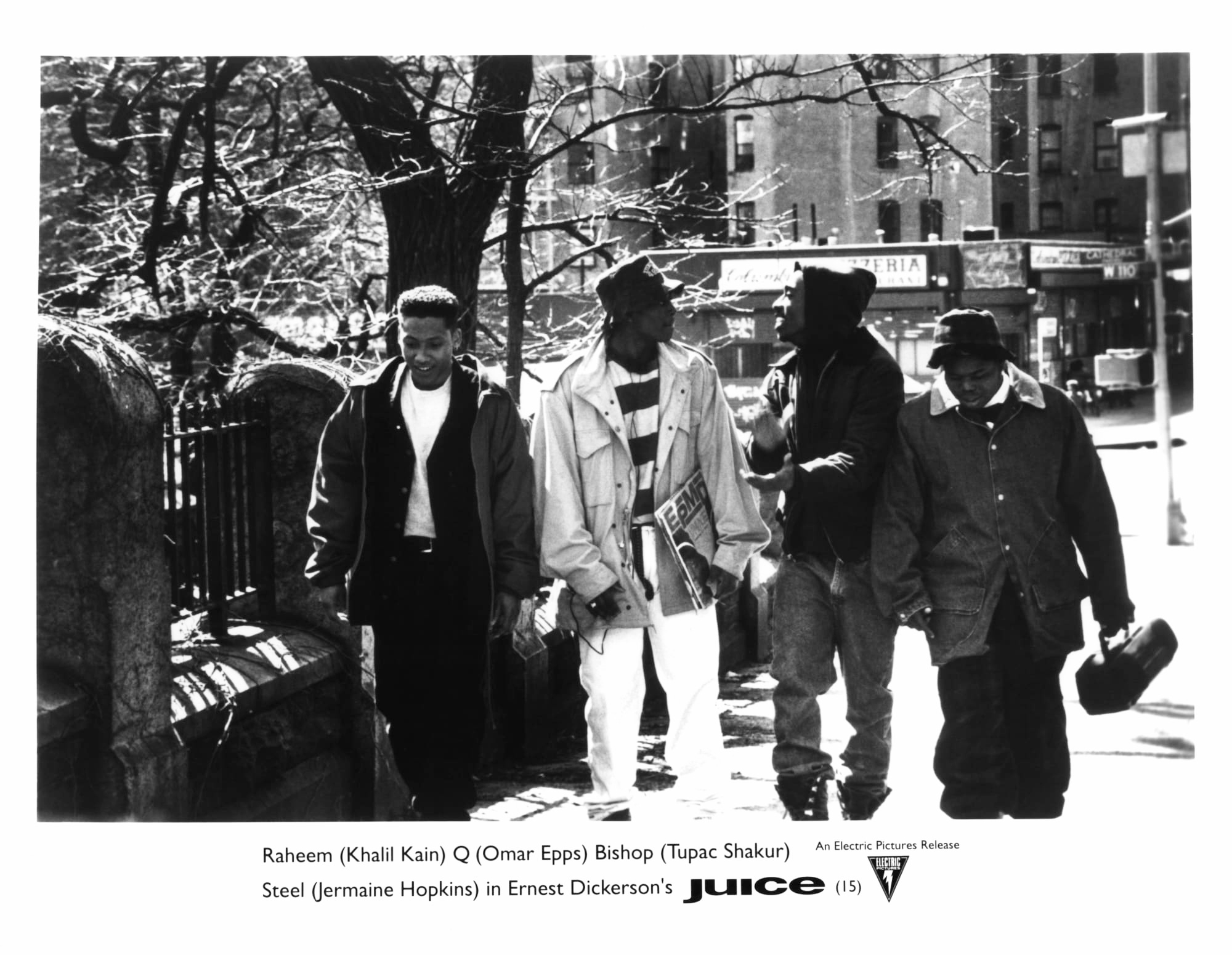
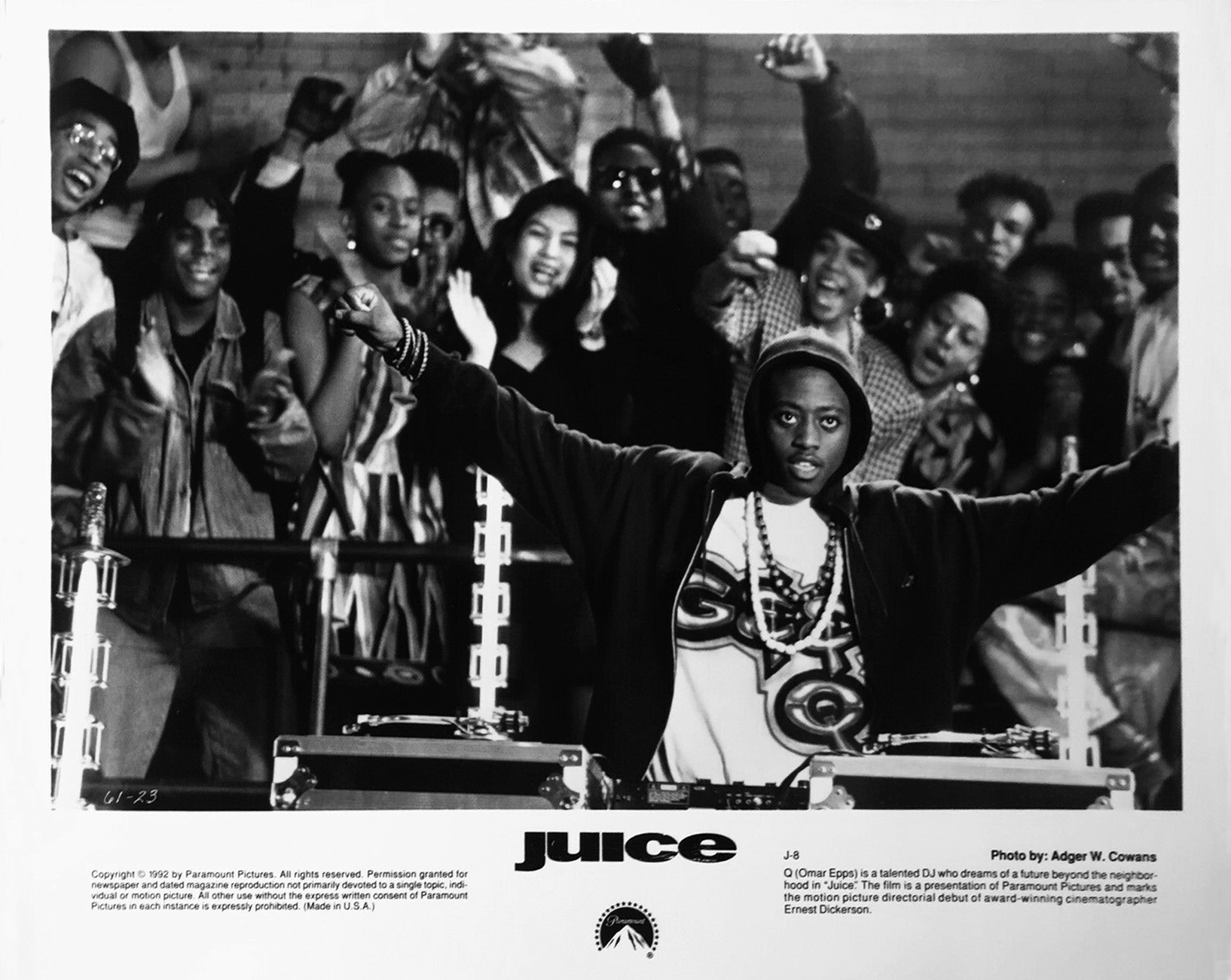
"Juice" (January 17, 1992)
"For the unknown stars of this $5 million film, getting ”juice,” a street term for respect and power, is as much a real-life obsession as it is for the characters they play. ”It’s about time there’s work for us,” says Shakur’s costar Khalil Kain, who just a few weeks ago was a bartender at a local nightclub. The timing certainly is right: Hollywood is coming off a year in which a record number of black films were released, and movie companies are looking to repeat the success of Boyz N the Hood and New Jack City, which grossed $56 million and $47 million respectively. ”Studios finally realize the dollar potential of making black films,” says Heyman, who is coproducing Juice with Neal Moritz. ”They cost so little to make and they don’t have to bring in $150 million to be considered a hit.” ”It’s a good thing, too,” says the 40-year-old Dickerson, ”because there’s an untapped wealth of black stories, and now some of them will finally get told.” ... Juice is about four Harlem homeboys who, says co-screenwriter Brown, ”have watched one Chuck Norris movie too many.” And while the message is anti-violence, the film has its share of guns and bloodshed. The movie’s theme and marketing campaign have already sparked concern over a possible replay of the violence that marred the debuts of New Jack and Boyz. Paramount, the film’s distributor, did revise Juice‘s poster — airbrushing out a large gun — though for creative reasons, not out of fear that it would incite violence, the studio says. Paramount also offered to pick up the cost of increased security in some theaters. But Dickerson believes that the film’s moderate bloodshed is an accurate reflection of life in the streets. His operative word is authenticity. ”This is about the perils of growing up black in the ghetto,” says the director, who hails from Newark. 'If I can accurately show that without the Hollywood wrappings, then I’ve done what I set out to do.'" - Entertainment Weekly, 1992. Below is a great (perhaps rare?) interview with the cast, and if you dig into the archives on this site, you can see 2Pac's original testing contract for the film in 1991, a review of the movie's soundtrack, and more! Juice is a cult-classic film that should continue to be celebrated. Rest In Peace, Tupac Shakur!
Tags:
1992,
2Pac,
Interviews,
Movies,
Nostalgia,
Omar Epps,
Publicity Photo,
R.I.P.,
VHS,
Videos
November 05, 2020
2pac (Makaveli) "The Don Killuminati: The 7 Day Theory" (11/5/96)
The recording sessions that yielded Tupac Shakur's last album took place over seven Hennessy-soaked days in August 1996, while the multitalented rapper was concurrently filming two movies (Gridlock'd and Gang Release). Approximately 20 songs were put to tape at Los Angeles' Can-Am studios, 11 of which made the finished product. (Much of the remaining material - most notably three tracks produced by Quincy Jones' son QD3, whose sister Kidada was reportedly engaged to Shakur at the time of his death - would appear on various posthumous compilations.) That 'Pac's final work was produced mainly by Tyrone "Hurt M Badd" Wrice and Darryl "Big D" Harper - two Death Row Records also-rans who failed to draw interest even in the vacuum left by the departed Dr. Dre - and featured guest spots mostly from 'Pac's childhood friends and family, the Outlawz, speaks volumes about the climate at the label at the time. Released nine months earlier, 'Pac's double opus, All Eyez On Me, had been certified quadruple-platinum, making the controversial star the marquee name at the most successful company in rap music. Apparently, though, internal Death Row rivalries and tension were at play (no doubt compounded by the notorious "East vs. West" beef boiling between Tupac and Biggie and a host of other New York hip-hop figures). So with Snoop and the Dogg Pound in an adjacent studio, 'Pac closed ranks and rushed his supporting cast of underdogs through a blitzkrieg artistic process - creating a dark, insular, paranoid collection of songs he subtitled "The 7 Day Theory." The urgency of the album is palpable. (Many listeners have, in fact, suggested that 'Pac somehow "knew" that he was running out of time.) The way it captures the raw morbidity of a man staring down his enemies is as powerful as it is downright disturbing. (It's telling that Eminem, 50 Cent and Busta Rhymes chose to remake "Hail Mary" as a diss record aimed at Ja Rule.) Today, Makaveli, with all its attendant contradictions, remains 'Pac fans' favorite memorial to their hero after his passing. - XXL Magazine, 10/03. R.I.P. 2PAC. Revisit the LP below...
Below is a copy of (part) of XXL's feature on the LP in 2003...
September 17, 2020
2Pac "Dead, But Still a Force" (9/17/06)
"I want to be in the future known as somebody," Shakur once said. "I want people to be talking about me, like, 'Remember when he was real bad?'" They're still talking. Unlike so many other rap stars, Shakur represented an actual character, instead of a caricature. "His messages were really strong and heartfelt, and he was a real person. He could go from saying 'Keep your head up' to using the word b--- in the next song," said Kanye West. "There was no box that he was put in, and he lived and died by what he said." Although just 25 when as assailant sprayed his car with bullets as he rode shotgun down a Las Vegas street, Shakur has been the subject of numerous books; film and stage productions have explored his colorful life; and college courses have dissected his songs, ranging from the player anthem "I Get Around" to the prophetic "How Long With They Mourn Me?" But why? Although some have anointed Shakur as the greatest rapper ever, largely due to his passion that could stir even casual listeners, the assessment is hardly universal. Others would give that title to The Notorious B.I.G., Shakur's foil who was killed months after Shakur. Others say Jay-z reigns supreme.... While other dead celebrities are celebrated as nostalgia acts for what they once represented, Shakur remains a vital presence in today's rap world. - 9/17/06 ... Continue reading below, and consider who is the G.O.A.T.... to YOU? Rest In Peace, Tupac Shakur. Hit the tags for more.
Tags:
2006,
2Pac,
Associated Press,
Nostalgia,
R.I.P.